How to Pack Dishes for Moving
 By Igor S.Red Cat co-founder, moving people since 2012
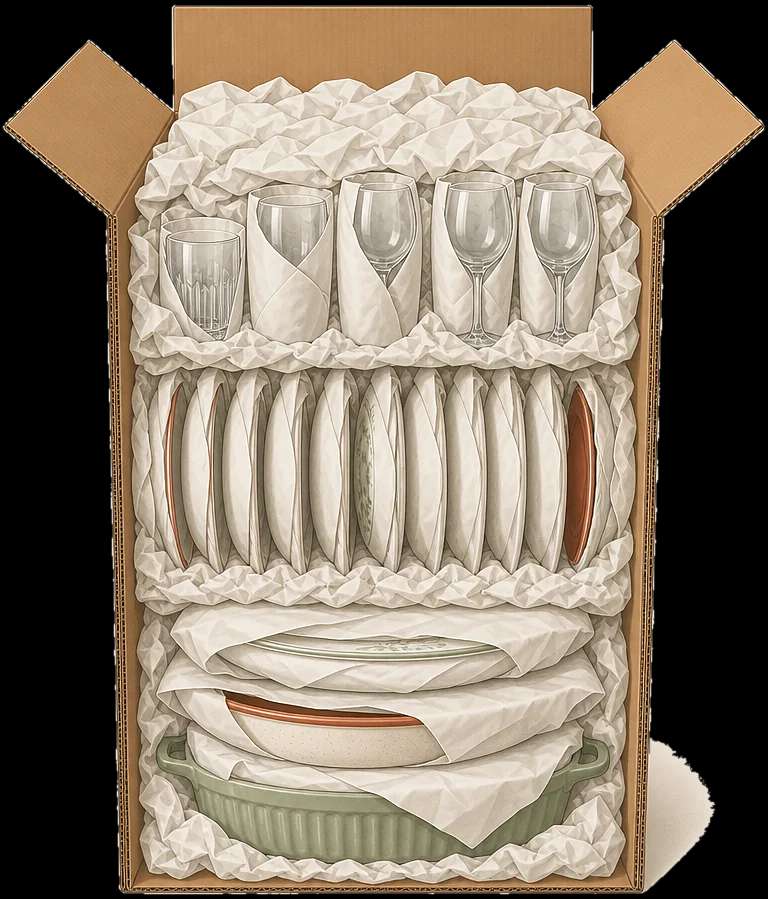
Packed right, a dish pack carries a shelf of your kitchen and nothing inside it moves. Here's how our packers fill one, from the bottom up: the heavy dishes low, the plates on edge, the glasses on top, every piece wrapped on its own.
The short version
- 1Crumpled packing paper on the bottom of a dish pack.
- 2The heavy dishes next, each wrapped in paper, lying flat.
- 3Then the plates, each wrapped, standing on edge, never flat.
- 4Glasses and wine glasses on top, each wrapped, standing up.
- 5Finish with a layer of paper on top, then tape it shut.
Layer by layer
How to pack a dish pack
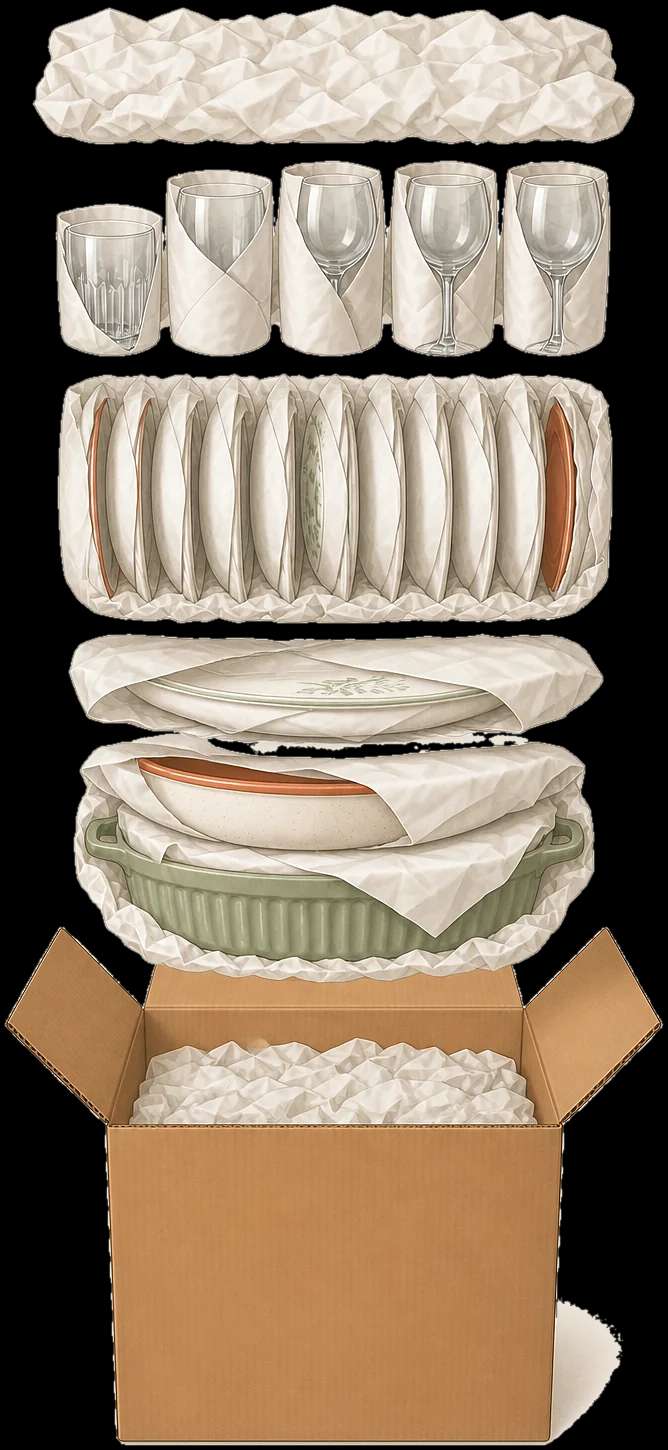
A dish pack is a tall, double-wall box made for the kitchen. Fill it in this order and the weight sits low, the plates stand on their strongest side, and the glasses ride on top where nothing presses on them.
Step 1
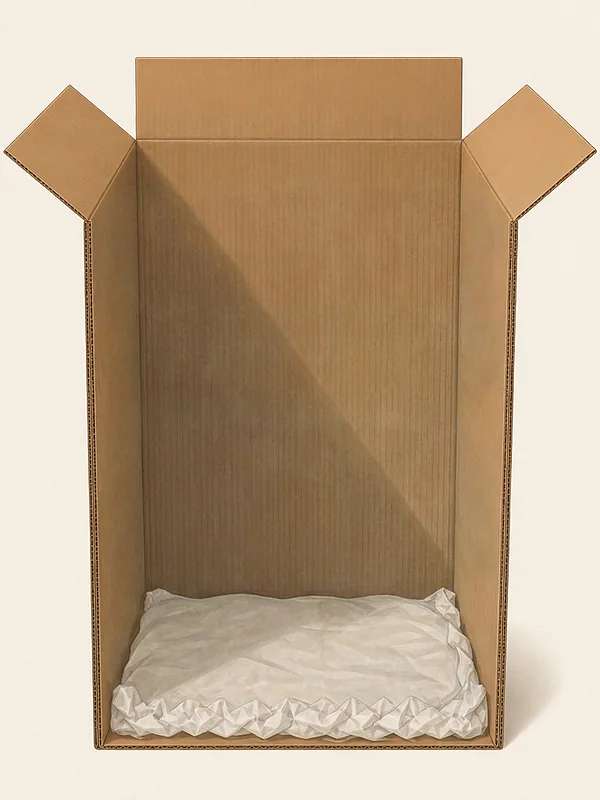
Paper on the bottom
Start with a thick layer of crumpled packing paper on the bottom of the box. Everything else sits on it, and it takes the bumps of the road.
Step 2
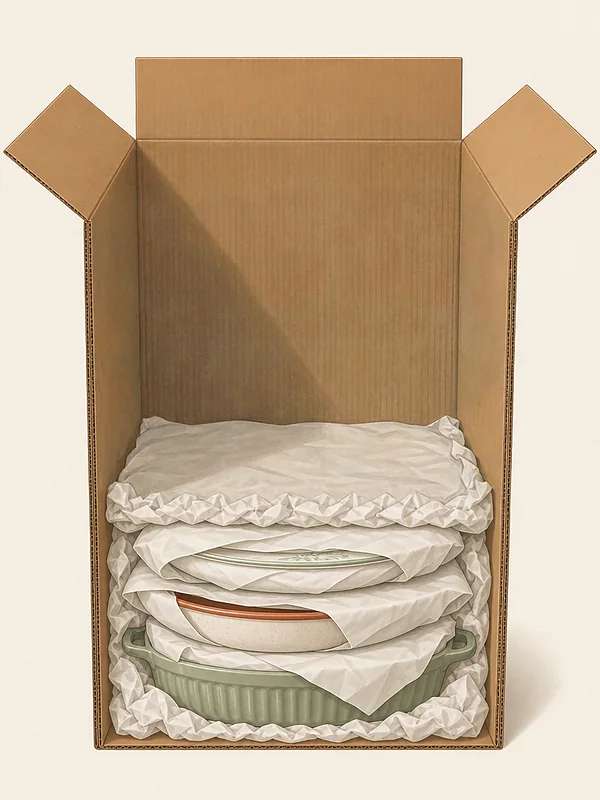
Heavy dishes on the bottom
The heaviest pieces go in first: casserole dishes, serving bowls, big platters. Wrap each one in packing paper on its own and lay it flat on the paper.
Step 3
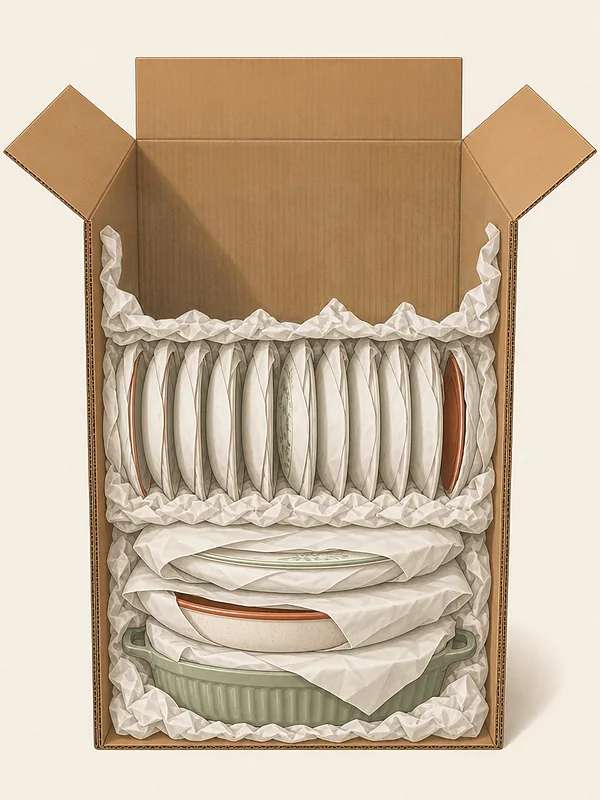
Plates on edge
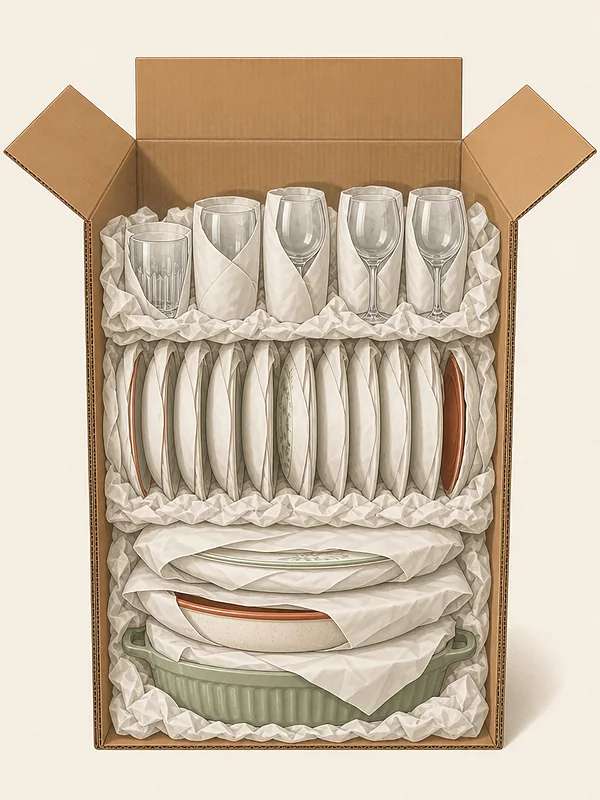
Then the plates, each one wrapped in paper, standing up on edge side by side, like records in a crate. Never stacked flat.
Step 4
Glasses and wine glasses on top
The lightest and most fragile go last, on top: drinking glasses and wine glasses, each wrapped in paper, standing upright. Nothing goes over them but paper.
Step 5
Paper on top
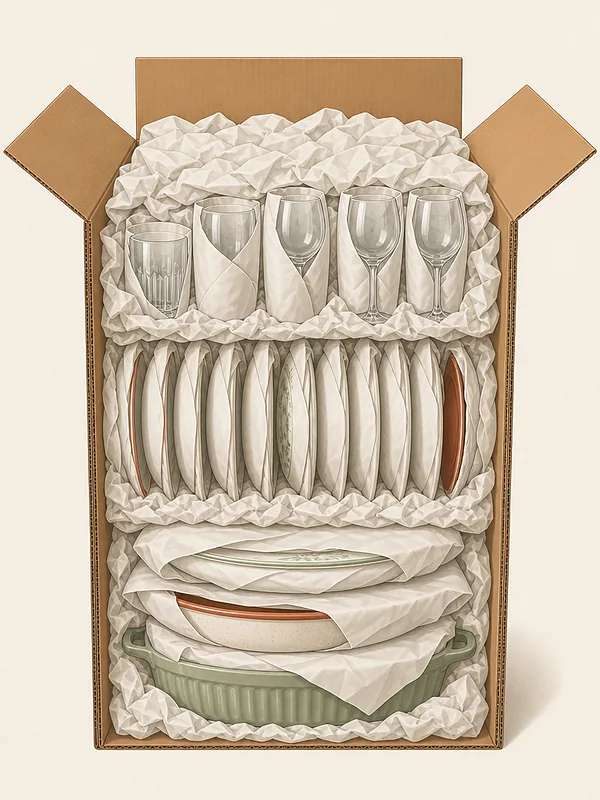
Finish with a thick layer of crumpled paper over the glasses, right up to the top of the box. The flaps press on paper, and nothing inside can move.
Step 6
Tape it shut
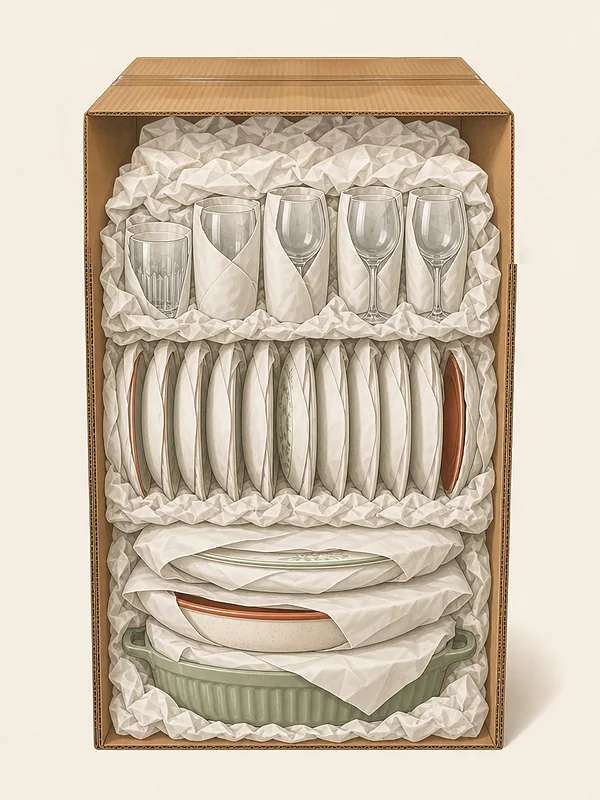
Fold the flaps down and tape the box shut. Mark it fragile and kitchen, on the top and on a side.
Fill every gap with crumpled paper as you go. Before you tape it, give the box a gentle shake: if anything moves, it needs more paper.
Plates and glasses
How to pack plates and wine glasses
How to pack plates for moving
On edge, never flat. Wrap each plate in packing paper on its own, then stand them up side by side in the middle of the dish pack, like records in a crate.
- Stacked flat, the bottom plate carries every plate above it, and every bump of the road comes down on their faces.
- On edge, each plate holds only its own weight, and the row of them packed tight can't slide.
- Bowls and platters are the heavy ones: they go under the plates, at the bottom of the box, each wrapped and lying flat.
How to pack wine glasses for moving
Wine glasses and drinking glasses are the last thing in, on top of the plates. Wrap each one in packing paper on its own, stem and all, and stand it upright. Nothing heavy goes over them: only a layer of crumpled paper before the box is closed.
Paper, not bubble wrap
Bubble wrap vs packing paper
Packing paper is the better wrap for a kitchen, and it's what our packers use. Here's why.
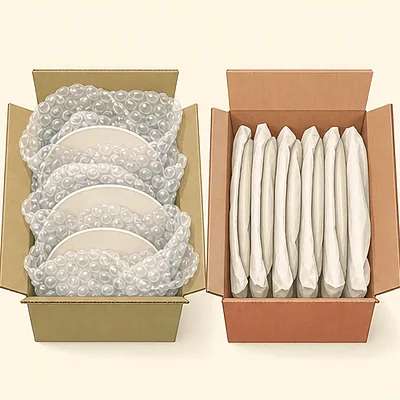
It takes a fraction of the room
Bubble wrap is mostly air. Wrap a whole kitchen in it and you'd have a truck full of bubble wrap. Paper folds tight around each dish, so a box holds more and the truck holds the kitchen.
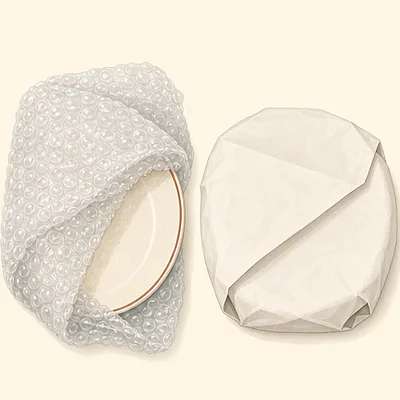
It stays where you put it
Bubble wrap is slippery: as the box moves, it slides around and leaves the edges and rims bare, the exact spots that chip. Paper grips, folds over a rim and stays there.
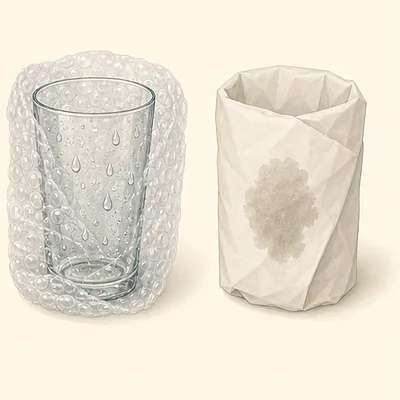
It soaks up moisture
Paper absorbs the damp from a humid day or a cold truck. Bubble wrap doesn't absorb anything, so whatever moisture gets in stays sealed against the dish.
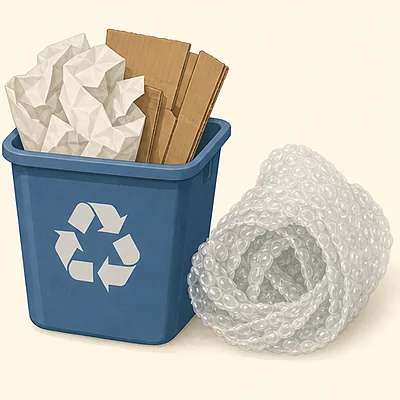
It recycles
When you unpack, packing paper goes in the recycling bin with the boxes. Bubble wrap is plastic film, and the recycling bin at home won't take it.
Rather have us pack the kitchen?
Our packers wrap and pack kitchens across DC, Maryland and Northern Virginia every day, with the dish packs, paper and tape included, for one flat price set before we start: from $240 for a 1-bedroom apartment.
See our packing services, or count your dish packs with the moving boxes calculator.
FAQ
Dish packing questions
answered
What people ask before they pack a kitchen themselves. Anything else, give us a call.
Talk with Red Cat- In a dish pack, from the bottom up: a thick layer of crumpled packing paper, then the heavy dishes each wrapped in paper and lying flat, then the plates each wrapped and standing on edge, and the glasses and wine glasses on top, each wrapped and standing upright. Finish with a layer of crumpled paper on top, fill the gaps until nothing moves when you shake the box, then tape it and mark it fragile.
Know your price.
Then let's move.
Your stuff moves. Your price doesn't.
Trusted by local people and businesses.